Vector art is a term that describes any art made with vector illustration software like Adobe Illustrator. Vector artwork is built from vector graphics, which are images created with mathematical formulas. In comparison, raster art (also referred to as bitmaps or raster images) is created with colourized pixels.
In graphic design, there are two main industry-standard file formats: Pixel based and Vector based.

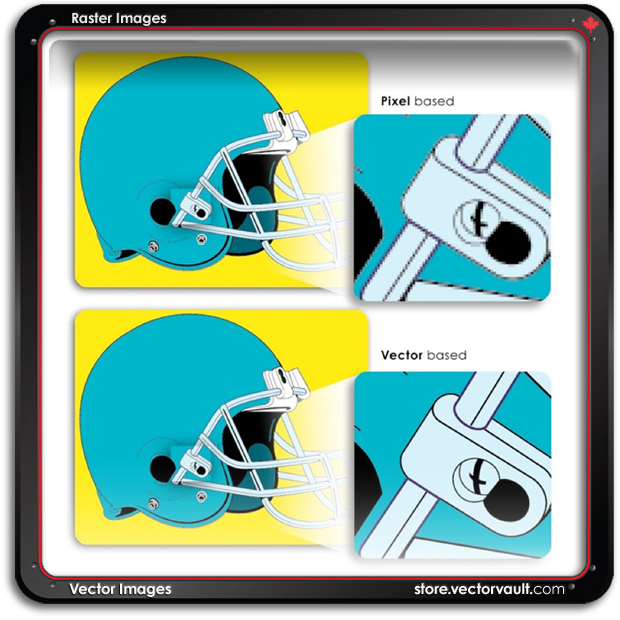
Pixel-based artwork (or raster-based as it is sometimes referred to) are images that are made up of pixels, the small coloured sucres that make up an image. File sizes can be very large and are dependent on dpi (dots per inch) for clarity.
When you enlarge a small raster image it immediately begins to degrade and look “pixelated”. This makes this format somewhat limiting. In order to work in large scale formats, you need high resolution photography. If you don’t have access to a high res version you may be forced to reshoot a photograph or you may be out of luck.

Vectors however, are mathematical. They are an assembly of anchorpoints, angles, colour values and shapes that can be adapted easily and enlarged without loosing resolution.
That’s why it’s better to build logos in vector art. A logo looks as crisp on a billboard as it does on a business card when you use this flexible format.
File sizes are small and work perfectly with Adobe Illustrator, Adobe Photoshop and other industry-standard applications.

Vector art is used by a wide variety of creatives from around the World every day. Illustrators, Animators, Textile Producers, Art Directors, Game Designers and Web Developers know their value. The flexible nature of this file format makes it a favourite among many industry professionals.
Design schools already prepare their students with the knowledge to handle vector art. Whether you have your sights set on directing a project or you are the person “pushing the keys”, it’s important to have some basic understanding of how they work and what they can do for you.

Vectors are easy to adapt. By simply rearranging points and adjusting angles, new ideas can be formed easily. This allows experimentation to shape projects more freely (something that raster-based graphics lack). Vector art brings out the artist in the designer. Yet it’s precision keeps it grounded. It’s the best of both worlds.
Manageable file sizes are also a big plus. When it comes to moving files from one application to the next it’s also nice to know that “everybody speaks vector”.
VECTOR BASED APPLICATIONS
Vector art can be edited in most of the Adobe Creative Suite Applications. Importing and exporting between them is a snap. Because many new applications on the market today are smaller and require even more image processing power, vectors are in high demand. As new apps hit the market each day, it’s fair to say that vector-based graphics will be powering much of that technology. Learning how to manage these files are becoming increasingly important.


WHERE DO YOU FIND VECTOR ART?
Many quality brands assemble great vector art. Our niche collection of vector tools continue to develop and improve. A purchase from you means something. We value that investment in us and appreciate it.
 ..
..
THE FOUNDATION OF GOOD DESIGN
There is a difference in those who work with vector files and those who do not. Mathematical accuracy and attention to detail are qualities that designers and developers should strive for. Vector art is more than just a universal file format. It is a way of approaching visual puzzles thoughtfully.